Removing a hinged door is simple. You can do it in 30 minutes. No special skills needed. This guide shows you exactly what to do.
You might remove a door to paint it. You might repair it. You might replace hinges. You might clean behind it. Whatever the reason, this guide helps.
Most doors weigh 50 to 80 pounds. You need help moving it. Two people make this easy. One person alone can struggle. Take your time. Rushing causes damage.
Tools You Will Need
Getting the right tools matters. Wrong tools waste time. They also damage your door. Here is what you need.
Most tools sit in your garage already. A few you might buy. They cost under $20 total. Home improvement stores sell everything here.
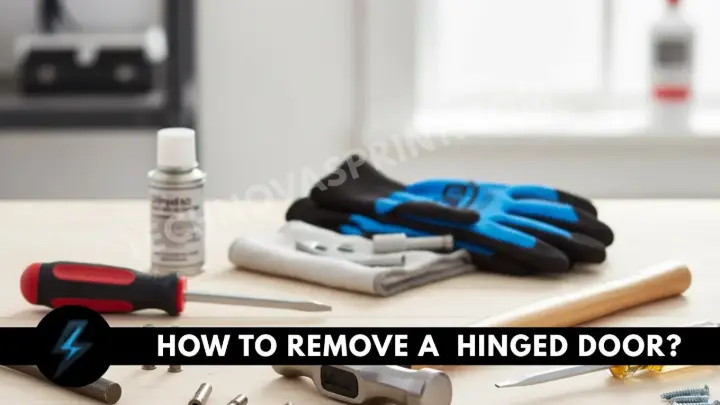
Tools to gather:
- Screwdriver (Phillips head and flathead)
- Power drill with bits
- Hammer
- Old nail or nail punch
- Tape to protect walls
- Work gloves
- Safety glasses
- Drop cloth
- Pencil for marking
- Pliers for grabbing
Lay tools on a table near your door. Find everything before you start. This saves time later.
Prepare Your Workspace
Good prep work makes the job easier. Bad prep creates problems. Spend 10 minutes getting ready.
Clear the area around your door. Move furniture away. Remove boxes and bags. You need 4 feet of space on both sides.
Protect your walls with painter's tape. Tape the wall next to the door frame. Tape protects paint from damage. Tape is cheap and easy to remove.
Lay a drop cloth on the floor. Screws and dust fall down. The cloth catches everything. Cleanup takes seconds instead of minutes.
Prep checklist:
- Move furniture away from door
- Put painter's tape on walls
- Lay drop cloth on floor
- Test your lighting
- Check you have all tools
- Ask your helper to stay nearby
- Make sure the door closes
- Mark hinge positions with tape
Know Your Hinge Type
Different doors have different hinges. Your hinges might use pins. Or they might use screws. Knowing this saves confusion.
Butt hinges are most common. They look like two metal leaves. They connect with a pin. The pin holds the door up. You pull the pin out. The door comes loose.
Some doors use screw hinges. These have screws instead of pins. You unscrew them. The door comes loose.
Look at your hinges right now. Do you see a small pin on top? That is a removable pin hinge. Do you see screw heads? That is a screw hinge.
Check your specific hinge:
- Open the door fully
- Look at each hinge closely
- See if there is a pin on top
- See if there are visible screws
- Count how many hinges you have
- Take a photo with your phone
- Mark hinges with tape
- Note if any hinges look rusty
Remove the Door Step by Step
Follow these steps in order. Do not skip any. Skip steps cause problems.
Step 1: Open the door wide
Open your door all the way. Push it open until it stops. The door should stick out 90 degrees from the frame. This gives you space to work.
Step 2: Support the door
Have your helper hold the door. They stand on one side. You stand on the other. The door stays level. Do not let it tilt.
Step 3: Remove the bottom hinge pin first
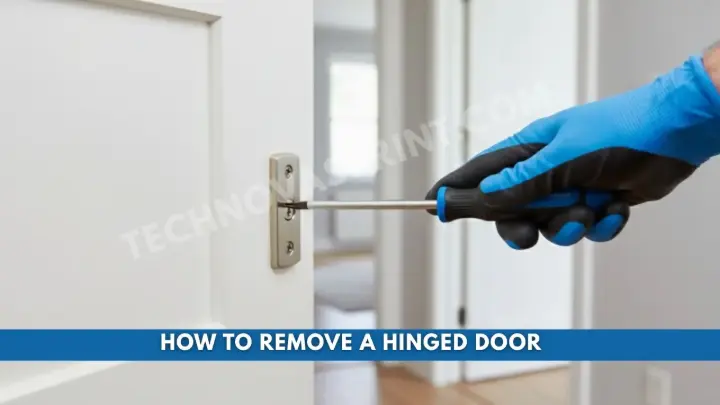
Look at the bottom hinge. You see the hinge pin on top. Take your nail punch. Place it under the pin. Tap gently with your hammer. The pin moves up slightly. Keep tapping. The pin comes out more. Once it sticks out enough, grab it with pliers. Pull it straight up. It slides out completely.
Step 4: Remove the middle hinge pin
Move to the middle hinge. Do the same thing. Tap the pin up. Grab it with pliers. Pull it out.
Step 5: Remove the top hinge pin
Save the top hinge for last. Do the same steps. Tap the pin up. Grab it. Pull it out.
Step 6: Lift the door carefully
The door now hangs by nothing. You and your helper must lift it. Both of you grip the door edge. Lift at the same time. Lift slowly and smoothly. Do not jerk it. Do not drop it. Walk to your workspace. Lay it down flat on sawhorses or a table.
If your door has screw hinges:
- Locate all screw heads
- Use your power drill or screwdriver
- Remove one screw at a time
- Support the door as you go
- Once all screws are out, lift carefully
Dealing with Stuck or Rusty Hinges
Hinges sometimes stick. Rust causes this. Paint can stick them too. Do not force them. Forcing causes damage.
If a hinge pin will not budge, spray it with oil. Penetrating oil works best. WD-40 is good. Spray the hinge pin. Wait 20 minutes. Let the oil soak. Try again gently. Usually it works now.
If paint holds the pin, use a plastic scraper. Scrape around the pin carefully. Scrape away dry paint. Do not dig deep. You just want to break the paint seal.
If a screw will not turn, apply penetrating oil. Wait 30 minutes. Try again. Turn slowly. Do not force it hard. If it still sticks, apply oil again and wait overnight.
Stuck hinge solutions:
- Spray with penetrating oil
- Wait 15 to 30 minutes
- Tap gently with hammer
- Scrape paint carefully
- Apply heat with hair dryer
- Try again slowly
- Never force stuck parts
- Sometimes overnight soaking helps
Safety While Removing Your Door
Safety matters more than speed. Protect yourself. Protect your helper.
Doors are heavy. They fall fast. Fingers get crushed. Toes get broken. Backs get hurt. Take safety seriously.
Wear safety glasses. Flying debris happens. Rust flakes fall. Dust goes up. Glasses protect your eyes.
Wear work gloves. Door edges are sharp. Rusty metal cuts skin. Splinters hurt. Gloves prevent injuries.
Wear closed-toe shoes. Drop a door on bare feet? That breaks toes. Solid shoes protect your feet.
Have your helper ready. Do not do this alone. One person cannot control a heavy door safely. Two people make it safe and easy.
Work slowly. Do not rush. Rushing causes mistakes. Mistakes cause injuries. Take 30 minutes if you need it.
Safety rules:
- Wear safety glasses
- Wear work gloves
- Wear closed-toe shoes
- Get a second person
- Work slowly and smoothly
- Keep hands and feet clear
- Communicate with your helper
- Take breaks if tired
- Keep kids and pets away
- Stop if something feels wrong
What to Do If Something Goes Wrong
Problems happen sometimes. Know how to handle them.
If a hinge pin breaks, you need a new pin. They are cheap. Buy one at any hardware store. Show the store your old pin. They will match the size.
If a screw head strips, use a rubber band. Place it over the stripped head. Push your screwdriver into it. The rubber grips the screw. Turn slowly. Often this works.
If the door feels stuck, do not pull harder. Look for what is catching it. Is it catching on the frame? Is something blocking it? Move the door slightly side to side. Find the problem. Then fix it. Do not force it.
If your helper drops the door, stay calm. Check for damage. Small dings are normal. Big cracks might happen. If the door is damaged badly, you may need to replace it. Small damage you can repair with wood filler.
Troubleshooting problems:
- Stuck pin: Apply more oil, wait longer
- Stripped screw: Use rubber band trick
- Door catches: Check for obstructions
- Broken hinge: Buy replacement at hardware store
- Cracked door: Use wood filler for minor cracks
- Bent hinge: Replace it, do not try to fix it
- Torn wood around hinge: Use wooden dowel with glue
After You Remove the Door
Now the door is out. What comes next?
You might paint it. Lay it flat on sawhorses. Use drop cloth underneath. Paint one side. Let it dry. Flip it. Paint the other side.
You might repair it. Clean the hinges. Remove rust with a wire brush. Tighten loose hinges. Replace broken parts.
You might clean behind it. Now you have access to that space. Sweep and vacuum. Wipe down the inside of the frame.
You might replace hinges. Unscrew the old ones. Screw new ones on. Make sure they line up perfectly.
Store the door safely. Lean it against a wall. Use wooden blocks to support it. Do not let it rest flat on the ground. Pressure on the bottom edge causes warping.
After removal tasks:
- Paint the door if needed
- Clean hinges and hardware
- Repair cracks or damage
- Fix or replace hinges
- Clean the floor and frame area
- Store door safely to prevent damage
Put the Door Back On
Eventually you put the door back. Do this carefully. Wrong installation causes problems.
Open the door frame. Have your helper ready. Both of you lift the door. Carry it to the frame. Line up the hinge holes.
Start with the top hinge. Insert the pin from the top. Tap it down gently. It slides into the hinge barrel. Push it all the way down.
Move to the middle hinge. Insert the pin. Tap it down. Push it all the way down.
Move to the bottom hinge. Insert the pin. Tap it down. Push it all the way down.
Test the door. Open it fully. Close it fully. It should swing smooth. It should close tight.
If it sticks, tap a hinge pin up a tiny bit. Sometimes adjustment is needed. Do not tap too much. A little adjustment goes a long way.
If you used screw hinges, reverse the removal. Line up holes. Insert screws. Use your power drill. Tighten them firmly. Test the door.
Reinstallation steps:
- Carry door to frame carefully
- Line up hinge holes
- Start with top hinge
- Insert pins from top
- Tap gently downward
- Do bottom hinge last
- Test door operation
- Make small adjustments if needed
- Close and open several times
When to Call a Professional
Most people can do this themselves. Sometimes you need help.
Call a professional if your door weighs more than 100 pounds. Heavy doors need two strong people. You might not be strong enough.
Call if hinges are welded on. Some commercial doors have welded hinges. You cannot remove them without welding tools.
Call if the door frame is damaged. Damage to the wood means special repair. Professionals know how to fix it.
Call if you are uncomfortable working at heights. Some doors are tall. You need a sturdy ladder. If you fear heights, get help.
Call if anything feels unsafe. Do not risk injury. Professionals know what to do safely.
At Technova Sprint, we understand home projects. Safety always comes first. Know your limits. Ask for help when you need it.
When professional help makes sense:
- Door weighs over 100 pounds
- Hinges are welded on
- Frame is cracked or damaged
- You feel uncomfortable or unsafe
- You lack proper tools
- Door is historic or expensive
- You have no helper available
Summary
Removing a hinged door is doable. You can do it yourself today.
Get your tools together. Prep your space. Know your hinge type. Follow the steps in order. Take your time. Stay safe.
Most people finish in 30 minutes. You will too. After this, you can paint, repair, or replace your door.
Come back to this guide if you forget a step. You now know how to remove a hinged door like a pro.
How to Remove a Hinged Door