Your mobile home living room is small. That's okay. You can make it look nice and feel comfortable. This guide shows you how to use your space better. You'll learn simple tricks that really work. No fancy design talk. Just real solutions for real spaces.
Start With What You Have
Mobile home living rooms are tight. Most are between 120 and 180 square feet. That's less than half a normal house living room. But size doesn't mean you can't have style. You just need to think differently.
The walls are close together. The ceiling is lower. Windows might not be in perfect spots. These things matter. When you know your limits, you can plan better. Every choice you make counts. One wrong choice wastes space. One right choice saves space. That's why planning comes first.
What makes mobile home rooms different:
- Ceilings run 7.5 to 8 feet tall (not 9 feet like regular homes)
- Room width is usually 12 to 14 feet
- Walls are thinner and need different design choices
- You might have support posts that take up space
- Heat and cooling vents use wall room
- Windows come in odd sizes and places
Pick Furniture That Fits
Most furniture is too big for mobile homes. A normal couch feels like a giant in a small room. Your furniture should match your room size, not magazine pictures.
Smaller pieces work best. A loveseat takes less room than a sectional. It still seats two people fine. Add a chair beside it and you have enough seating. Don't stuff three pieces into a tiny room. Less furniture means more walking space. More space means the room feels bigger.

Look for furniture with legs you can see. Skirted furniture hides the floor. This makes rooms feel smaller. Lifted furniture shows floor space. Your eye sees more room. It's a small trick that works.
Best furniture choices for mobile homes:
- Loveseat sofas measuring 72 to 80 inches wide
- Armchairs instead of oversized recliners
- Nesting tables (two small ones instead of one big one)
- Ottomans with storage inside
- Wall shelves instead of tall bookcases
- Sleeper sofas for guests without a spare bedroom
- Light chairs you can move around easily
- Corner furniture that hugs your walls
Use Light Colors on Your Walls
Light walls make small rooms feel open. Dark walls make them feel closed in. It's not a mystery. It's how light works. Light bounces off light colors. Dark eats light.
Paint all four walls one soft color. White, cream, or soft gray all work great. Pick one and stick with it. This makes the room feel bigger. Your eye doesn't stop at color changes. It moves smoothly through the space.
You can add one accent color if you want personality. Put it on small things. Use it in pillows, blankets, and wall art. Not on big furniture. Not on walls. Just touches of it. This keeps your room looking open while adding your style.
Color tips that work:
- Use paint that matches your trim color
- Light colors reflect more light from windows
- Avoid dark red, dark blue, or black on walls
- Cream is warmer than pure white
- Soft gray with warm undertones feels cozy
- Add color through pillows and throws
- Change pillows with seasons to refresh the look
- Match curtain colors to wall colors
Get Lighting Right
Mobile homes often feel dark. Few windows means less natural light. Your lights need to work hard. One ceiling light isn't enough.
Use several types of light. Put a ceiling light in the middle. Add wall lights on both sides of your TV. Put a small lamp on a table. Use a floor lamp in a corner. Each light does one job. Together they make the room bright and welcoming.
Dimmer switches help a lot. Bright light works for cleaning. Softer light works for relaxing. You get both from one setup. LED bulbs use less power and last longer. They're worth the cost.
Lighting setup for small rooms:
- Recessed ceiling lights for general brightness
- Wall sconces beside the TV area
- Table lamps on side tables
- One floor lamp in a far corner
- Dimmable switches for mood control
- LED bulbs to save electricity
- Light-colored lamp shades to spread light
- Avoid dark lamp shades that absorb light
Make Storage Work Hard
Small rooms need smart storage. You can't waste space on piles of stuff. Everything needs a home. Everything needs to fit out of sight.
Shelves on walls save floor space. Don't use tall bookcases. Use floating shelves instead. They hold things without taking up room. Put your TV on a wall shelf with cabinets below. Store remotes, blankets, and books inside.
Ottomans do double duty. You sit on them. You open them to store blankets inside. That's smart furniture. A coffee table with shelves below holds magazines and papers. Use baskets on shelves to hide clutter while keeping things organized.
Storage ideas that work:
- Floating shelves above furniture
- Wall-mounted TV cabinet with drawers
- Storage ottoman that doubles as seating
- Coffee table with bottom shelf
- Decorative baskets to hide items
- Hooks on walls for coats and bags
- Wall organizers for remotes and papers
- Under-sofa storage boxes on wheels
Windows Need the Right Coverings
Window coverings do more than look nice. They control light. They keep heat in winter and out in summer. They give you privacy.
Roller shades are simple and clean. Cellular shades save energy. Both take up less space than heavy curtains. If you like curtains, use light fabric. Dark heavy curtains make small rooms feel cramped.
Mount your rods high and wide. Go higher than the window frame. This makes your windows look bigger. It makes your ceiling look higher. These small tricks add up to make your room feel more open.
Window covering options:
- Cellular shades for insulation and light control
- White or cream roller shades for a clean look
- Light curtains in neutral colors
- Sheer panels for privacy with natural light
- Mount rods all the way to the ceiling
- Choose fabric that matches your wall color
- Avoid heavy, patterned fabrics in small rooms
- Use blackout options only in bedrooms
Add Rugs and Textures
Empty floors look cold and small. A rug defines your living room space. It adds softness underfoot. It brings warmth to the room.
Pick a rug size that fits your space. Too small and it looks like a postage stamp. Too big and it eats the room. For most mobile homes, 5x7 or 5x8 rugs work best. Place it under your sofa and coffee table.
Add texture through pillows, blankets, and wall art. Mix smooth leather with soft velvet. Add woven baskets. Include one live plant. These textures make the room feel real and lived-in, not empty and cold.
Rug and texture choices:
- 5x7 or 5x8 rugs for most mobile home living rooms
- Neutral colors that hide dirt and stains
- Textured rugs that add visual interest
- Mix fabric types (leather, cotton, linen)
- Add 3 to 4 throw pillows in different textures
- Include one live plant for freshness
- Hang one or two pieces of wall art
- Layer different textures for depth
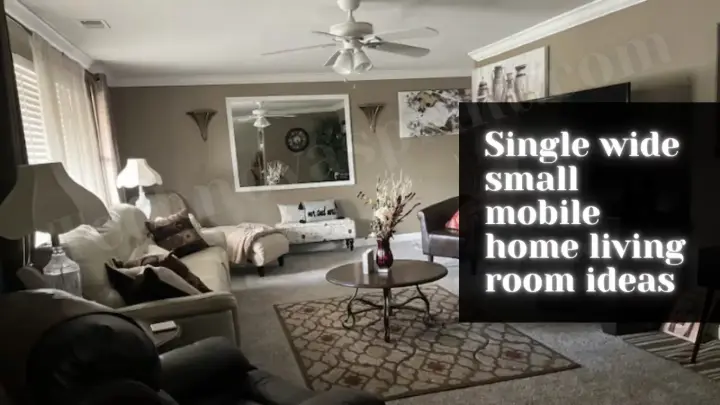
Make the Room Feel Taller
Lower ceilings are a real issue in mobile homes. You can't raise the ceiling. But you can make it feel higher.
Hang things on your walls up high. Put artwork 60 inches from the floor. Place shelves near the top of walls. Use vertical lines in your décor. All of these draw eyes upward. When eyes look up, the room feels taller.
Use tall, skinny furniture instead of wide, short pieces. A floor lamp with a tall stand takes up less visual space than a wide ottoman. Even though they take the same floor space, the tall one makes your room feel bigger.
Ways to add height:
- Hang artwork in the upper half of walls
- Install shelves near the top of walls
- Use vertical lines in wall art and patterns
- Choose tall floor lamps with thin stands
- Mount your TV high on the wall
- Use tall plants in corners
- Select narrow side tables instead of wide ones
- Avoid wide, low furniture when you can
Arrange Furniture to Keep Flow
How you place furniture matters as much as what you pick. Poor placement blocks space. Smart placement opens it up.
Don't push all furniture against walls. This feels cramped. Leave a chair floating in the room. Angle furniture slightly. Create a clear path to walk through. This makes the room feel less crowded.
Create one focal point. Usually this is the TV. Arrange seating to face it. Don't scatter furniture all over. One focus point keeps things organized and clear.
Furniture arrangement tips:
- Leave walking paths clear through the room
- Angle furniture toward a focal point
- Don't push every piece against a wall
- Create conversational groupings
- Keep one chair or table slightly away from walls
- Face seating toward the TV
- Leave space between furniture pieces
- Avoid blocking windows or doors
Keep Things Simple and Clean
The best design is simple design. You don't need lots of decorations. Too many things make small rooms feel cluttered.
Pick five to seven decorative items. That's enough. A plant, a lamp, some pillows, a throw blanket, two pieces of wall art, and maybe a small sculpture. That's it. That's plenty. More than this starts to feel messy.
Keep surfaces clear. Your coffee table shouldn't hold ten things. One magazine holder and coasters is enough. Clear surfaces make small rooms feel open. Cluttered surfaces make them feel tight.
Decoration guidelines:
- Choose 5 to 7 main decorative pieces
- Keep coffee table surfaces mostly clear
- Store items you don't use often
- Use one large plant instead of many small ones
- Limit wall art to 2 to 3 pieces
- Choose storage solutions that hide clutter
- Keep kitchen and dining areas organized
- Rotate decorations seasonally
Light Fabric Choices
Your fabric choices affect how the room feels. Heavy, dark fabrics close off space. Light, soft fabrics open it up. This applies to curtains, pillows, and even your sofa covering.
Cotton and linen are smart choices. They feel light and look airy. They're easier to keep clean than velvet or suede in a busy living room. You can wash most cotton and linen covers. That keeps everything looking fresh.
Avoid thick, dark, patterned fabrics. These are harder to clean. They make small spaces feel heavier. Light solids or simple patterns work much better.
Fabric selection:
- Cotton or linen on sofas and chairs
- Lightweight fabrics on curtains
- Light solid colors over dark patterns
- Machine-washable fabrics when possible
- Avoid heavy velvet in tiny rooms
- Natural fibers feel lighter than synthetics
- Mix one textured fabric with smooth fabrics
- Keep upholstery neutral in color
Use Mirrors Smartly
Mirrors reflect light. They make rooms feel bigger. But place them wrong and they just reflect clutter. Place them right and they work magic.
Hang a mirror across from a window. This reflects light around the room. Hang a tall mirror behind a small side table. The table disappears. Your wall looks deeper. Use one large mirror instead of many small ones. Many small mirrors chop up space visually.
Mirror placement ideas:
- Across from windows to reflect light
- Behind side tables to create depth
- On walls opposite the entrance
- In corners to bounce light around
- One large mirror works better than multiple small ones
- Avoid mirror walls (they feel cheap and small)
- Place mirror where it reflects something nice, not clutter
Add Your Personal Style
Your home should feel like you. Don't just copy magazine pictures. They're styled by professionals in perfect light. Your real life is messier and that's okay.
Pick colors and styles you actually love. If you like warm colors, use them. If you like modern style, go modern. If you like cozy, make it cozy. The space should match your life. Design rules matter less than living well in your space.
Include photos of people you love. Display items that mean something to you. Read books you actually like on your shelves. This personal touch makes small spaces feel like real homes, not showrooms.
Smart Choices for Small Mobile Home Living Rooms
The best single wide small mobile home living room ideas are the ones you'll actually use. Don't buy things because a designer said to. Buy things because they fit your life.
Start with one small change. Add a rug. Move furniture around. Paint one wall. See how it feels. Keep what works. Change what doesn't. Good design happens slowly, not all at once.
Remember that your space is good enough as it is. You're not trying to be a mansion. You're trying to be a home. A comfortable, clean, organized home. That's the real goal. Everything else is just steps to get there.
For more tips on home design and improvement, visit technovasprint.com.
Key things to remember:
- Start small with one change at a time
- Keep surfaces clear and organized
- Use light colors on walls
- Layer your lighting
- Pick furniture that fits your space
- Add personal touches that make it yours
- Don't buy just because it's trendy
- Walk through your space and see how it actually works
Your mobile home living room can be beautiful. It can be comfortable. It can be yours. Use these ideas. Skip what doesn't fit your life. Build something real.
Single Wide Small Mobile Home Living Room Ideas That Work