Hardwood floors cost a lot of money. Construction can damage them easily. Dust, dirt, and water can harm your floors. Heavy tools and boots can scratch the wood. Protecting floors means covering them while work happens. This keeps your floors safe and looking new.
Construction brings many dangers to hardwood floors:
- Workers walk with dirty boots on the floor
- Heavy equipment rolls across the surface
- Water and moisture damage the wood
- Paint and chemicals stain the surface
- Tools drop and leave dents
- Dust gets stuck in the wood
Protecting your floors saves time and money later. Fixing damaged hardwood costs thousands of dollars. It's much cheaper to protect floors now.
Why You Need To Protect Hardwood Floors
Hardwood floors need care during building work. The wood is soft and gets damaged quickly. Water makes wood swell and warp. Scratches show on the shiny finish. Stains from chemicals don't come out easily.
Your hardwood floor investment is at risk:
- Water causes the wood to cup and buckle
- Dust gets into the grain and is hard to remove
- Scratches and gouges need refinishing
- Chemical spills leave permanent marks
- Heavy foot traffic dents the surface
- Temperature changes crack the wood
Protecting floors saves money on repairs. Refinishing damaged hardwood costs $5,000 to $15,000 or more. It also makes construction finish faster. Work doesn't stop for floor repairs.
Start With A Clear Plan
Planning before construction starts makes everything easier. Walk through your home and find all hardwood floors. Take photos of the current condition. Write down what work will happen in each room.
Steps to plan for hardwood floor protection:
- Take clear photos before any work begins
- Mark all areas with hardwood on your plans
- Decide which protective method to use
- Order materials before construction starts
- Tell all workers about floor protection rules
- Set up a cleaning schedule
- Plan how water will drain during wet work
Good planning stops problems before they start. Everyone knows what to protect. Materials arrive on time. Workers understand the expectations.
Choose The Right Floor Covering
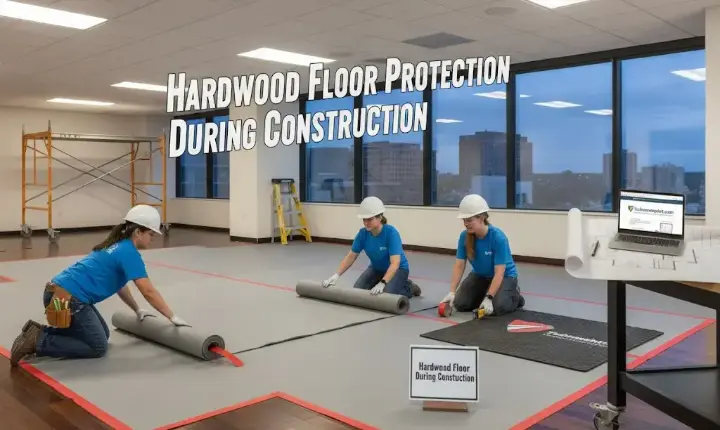
Different coverings work for different jobs. Plywood is thick and strong. Plastic film protects from water. Paper covers cost less money.
Floor covering options for different needs:
- Plywood sheets: Best for heavy equipment and foot traffic. Use half-inch thickness or thicker.
- Plastic floor film: Stops water and dust. Works well for most construction.
- Rosin paper: Cheap protection from dust and light spills.
- Rubber floor mats: Protect from dropped tools and impact damage.
- Felt paper: Good for moisture protection under other coverings.
- Temporary adhesive membrane: Sticks to floor without leaving marks.
Your choice depends on the type of work. Painting needs different protection than concrete work. Ask your contractor what they recommend.
Manage Water And Moisture
Water is the biggest enemy of hardwood. Wood absorbs water and swells up. This causes cupping and buckling. Once this happens, you may need to replace the floor.
Moisture control keeps wood stable:
- Block water with plastic sheeting and barriers
- Use dehumidifiers in work areas
- Keep humidity between 30% and 50%
- Fix leaks right away before water spreads
- Dry wet areas with fans and ventilation
- Keep windows closed during rain
- Test moisture levels with a moisture meter
- Let construction materials dry fully
- Avoid scheduling wet work near hardwood floors
Moisture management is your top priority. Check humidity daily. Use air movers to keep air flowing. Close off wet areas from hardwood zones.
Control Foot Traffic And Dirty Paths
Construction workers track dirt on floors. They carry water and mud on their boots. One person walking across a floor makes damage worse.
Create clean walking paths:
- Set up one main path for workers to use
- Cover this path with heavy protection
- Make workers wipe feet before entering
- Use shoe covers for all workers
- Keep work areas separate from finished areas
- Schedule heavy traffic during certain hours
- Clean up spills and debris immediately
- Put up signs reminding people about floor protection
- Check that workers follow the rules
Tell all workers why floor protection matters. Show them the cost of repairs. Make it easy for them to follow the rules.
Prevent Chemical Damage
Paint, stain, varnish, and cleaners can harm hardwood. These chemicals soak into the wood and stain it. The damage is often permanent.
Stop chemical damage:
- Keep all chemicals away from hardwood areas
- Use plastic barriers when chemicals are nearby
- Put down extra protection during painting
- Clean spills right away with the correct cleaner
- Use less toxic products when possible
- Store chemicals in sealed containers
- Label all chemical areas clearly
- Train workers how to handle chemicals safely
- Keep spill cleanup supplies close by
Act fast if a spill happens. Quick cleanup stops the chemical from soaking in. Have absorbent materials ready.
Protect Floors From Tool And Equipment Damage
Heavy tools and machines damage hardwood. A dropped hammer leaves a dent. A dragged metal edge leaves a gouge.
Prevent equipment damage:
- Pad equipment wheels and feet
- Keep tools in designated storage areas
- Clean equipment before moving it
- Use carts with soft wheels for moving items
- Slide heavy items on cardboard, never drag
- Keep sharp tools away from floors
- Store materials on shelves, not on floors
- Use floor runners for equipment paths
- Check equipment for rough edges
- Watch workers as they move large items
Equipment management stops most damage. Take time to set up proper storage. It saves hours of floor repair later.
Monitor Floor Condition During Work
Check your floors daily or weekly. Look for new damage. See if protective coverings are still in place.
What to check during construction:
- Look for tears or gaps in floor coverings
- Check that protective barriers are secure
- Feel for moisture or wet spots
- Look for stains or spills on the covering
- Inspect for damage under the protection
- Check that workers follow the rules
- Test humidity levels with a meter
- Look for equipment marks or dents
- Check that traffic stays on planned paths
- Document any new damage with photos
Keep a simple inspection checklist. Write down what you see each day. Take photos of any problems. Fix issues right away.
Clean Hardwood Floors After Construction
After construction ends, your floors need special care. Construction dust is fine and gets everywhere. Regular cleaning doesn't remove all of it.
How to clean after construction ends:
- Remove all protective coverings carefully
- Vacuum thoroughly with a quality vacuum
- Wipe down the entire floor with a microfiber cloth
- Use a hardwood floor cleaner made for wood
- Do not use water or soap on hardwood
- Open windows for good air flow
- Use fans to dry the floor completely
- Let the floor settle for one week
- Check for any damage that needs repair
- Take final photos for your records
Be gentle during cleanup. Rough cleaning can scratch new floors. Hire professionals if you're not sure how to clean.

Fix Any Damage Right Away
Small problems become big problems if ignored. A tiny scratch grows into a larger issue. A small stain spreads and darkens over time.
How to address damage:
- Document all damage with photos
- Fix small scratches with wood filler
- Use matching stain for discolored areas
- Sand lightly if the finish is damaged
- Reapply finish to repaired spots
- Get professional help for large damage
- Keep samples of the original finish
- Test repair products on hidden areas first
- Compare repairs to the original floor color
Acting quickly stops damage from spreading. Some small marks disappear with proper care. Address bigger problems within the first week.
Set Up Long-Term Floor Care
Your hardwood needs proper care after construction ends. Good maintenance keeps floors beautiful for decades.
Ways to care for your hardwood floor:
- Vacuum regularly with a soft brush
- Wipe spills immediately with a dry cloth
- Use only hardwood floor cleaner
- Maintain humidity between 35% and 55%
- Avoid direct sunlight on the floor
- Use area rugs in high traffic spots
- Place felt pads under furniture
- Keep pet nails trimmed short
- Avoid walking in heels or hard shoes
- Have the floor professionally cleaned yearly
Regular care is much easier than repairs. A little prevention goes a long way. Teach family members how to care for the floors.
Key Takeaways For Floor Protection
Protecting hardwood floors during construction is worth it. The cost is small compared to repairs. Good planning stops most problems. Clear rules keep everyone on the same page. Regular checking catches issues early.
Start protection before construction begins. Keep moisture controlled. Manage foot traffic carefully. Prevent chemical spills. Check floors often. Clean properly after work ends. Fix damage quickly.
Your hardwood floors are an investment. Protect them during construction. They will look beautiful for years to come. For more information on construction planning and materials, visit TechnovasPrint.
The work is simple. The benefit is huge. Protect your hardwood floors today.
Hardwood Floor Protection During Construction